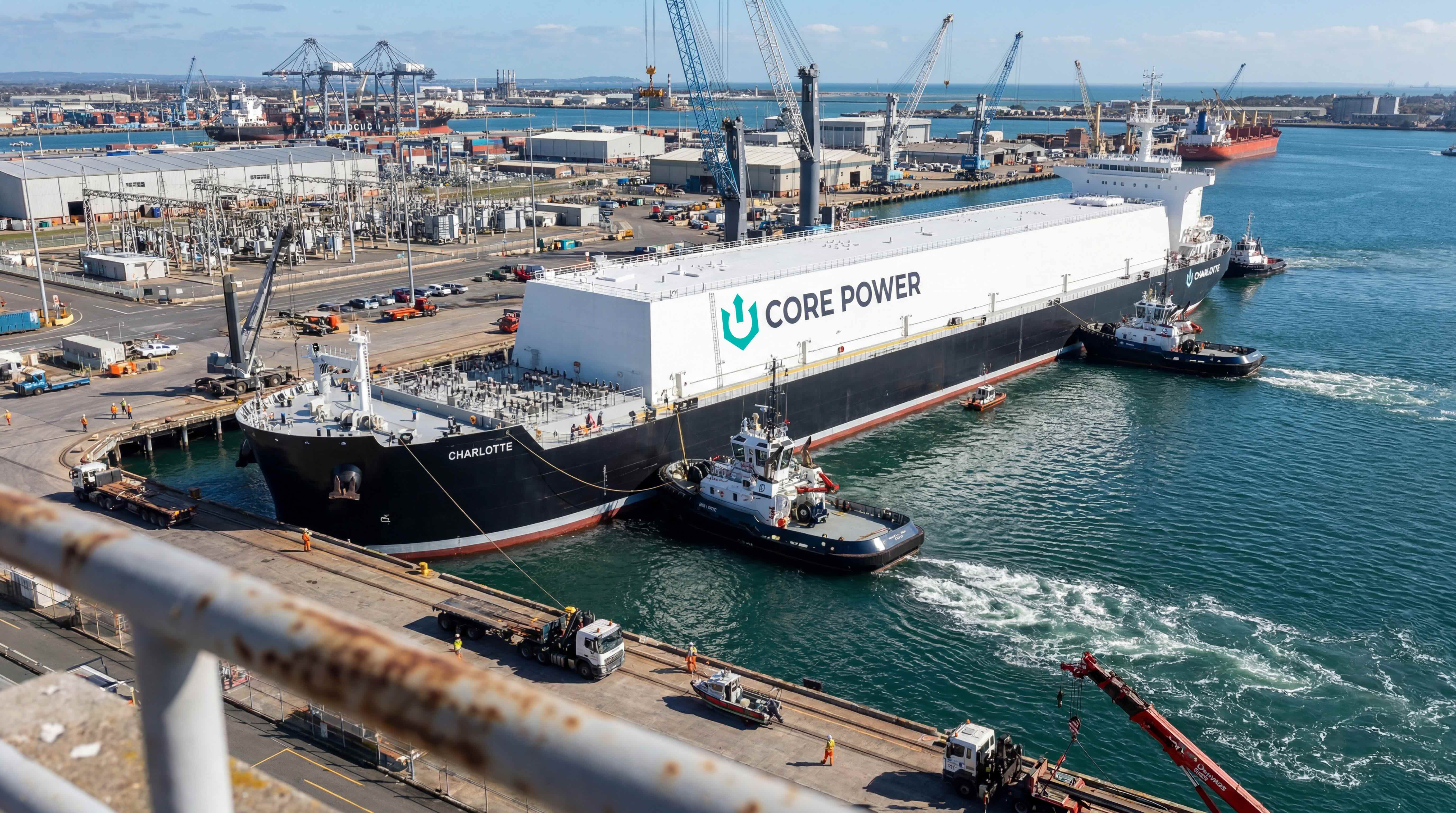
Britain does not need to dominate every part of the maritime nuclear supply chain to lead the next era of the market. It needs to help create the conditions for the technology to be licensed, insured and deployed at a commercial scale.
That is one of the central opportunities identified in Policy Exchange's new report, Powering the Future: Leveraging the UK's Nuclear and Maritime Heritage. The paper argues that the UK can turn its nuclear experience and maritime strengths into a valuable role within an emerging global market.
From technology to market
Civil maritime nuclear is no longer only a matter of reactor design. The commercial challenge is to build the complete system around the technology: licensing, classification, liability, insurance, port access, shipyard capability, a skilled workforce, through-life support, international recognition and public confidence.
Without that architecture, even a technically credible reactor remains a special project. With it, maritime nuclear can become a repeatable commercial product.
This independent report is therefore most valuable as a call to move from general interest to practical preparation. It sets out decisions the UK can begin taking now, while the rules and market structures are still being formed.
Two products, two pathways
The paper also makes an important distinction between two related but different products:
Floating nuclear power plants are ship-based power stations designed to deliver firm, clean electricity and potentially heat to coastal grids, industry and strategic infrastructure.
Nuclear-powered commercial ships can operate for years between refueling, offering greater endurance, reliability and protection from fuel-price and supply shocks.
They can share industrial capabilities, supply chains and international standards, but they do not serve the same customers, operating models or regulatory requirements. Developing distinct but interoperable policy and regulatory pathways for the two products is essential to credible commercial deployment.
A role built on British strengths
The report is clear that the UK should not try to recreate East Asian shipbuilding scale. Its opportunity lies in the high-value functions that determine whether complex maritime assets can operate across jurisdictions and attract capital.
Britain retains important capabilities across nuclear engineering, maritime regulation, law, insurance, standards-setting, high-integrity manufacturing and systems integration and has an opportunity to rebuild and connect them around a new global market. London remains a global center for maritime services, while the UK has deep experience in nuclear safety, through-life support and the governance of technically demanding assets.
Those capabilities can make the UK a valuable global partner within a wider allied delivery model, supplying high-value components, engineering and assurance services even where final vessel assembly takes place in allied shipyards.
The decisions to take now
The report points towards several practical priorities:
Expand the National Shipbuilding Office, or create a dedicated Civil Nuclear Maritime Regulatory Office, to provide a clear government “front door” and route from concept to commercial operation;
Publish a licensing roadmap and a UK Nuclear Maritime Code, with distinct but interoperable pathways for floating nuclear power plants and nuclear-powered ships;
Establish predictable liability and insurance arrangements that allow risks to be clearly allocated, understood and priced;
Convert UK-US political intent into a formal civil nuclear maritime work program covering regulation, port access, safeguards, fuel, workforce and demonstrator projects;
Develop a specialist British role in high-value manufacturing, systems integration, passive-safety certification and digital lifecycle assurance; and
Coordinate UK leadership through the IMO and IAEA, supported by industry testing of emerging rules.
Mikal Bøe, CEO of CORE POWER, said:
“Policy Exchange has asked the right question: not whether Britain should dominate every part of the maritime nuclear supply chain, but where it can become a valuable global partner. The UK has the opportunity to rebuild its world-class strengths in nuclear engineering, maritime systems integration, international standards-setting, law, and insurance. Those capabilities can help turn exciting new technology combinations into affordable energy, enhanced national security and tens of thousands of high-quality jobs.
The next step is coordinated action: a clear route from concept to operation, distinct but interoperable pathways for floating nuclear power plants and nuclear-powered commercial ships, and a practical UK-US program covering regulation, port access, liability, workforce and demonstrator projects. Britain should help write the rules of this market, not wait to follow them.”
Building the complete product
At CORE POWER, we are building the industrial platform needed to deliver fleet-scale maritime nuclear infrastructure, including floating nuclear power plants and nuclear-powered commercial ships. Our focus is the complete product: selecting suitable reactor technologies and integrating them with naval architecture, marine and nuclear engineering, shipyard production, regulation, commercial structures and lifecycle support.
That is why policy architecture matters. Customers do not buy a reactor in isolation. They need a power station or a nuclear-powered ship that can be built, licensed, financed, insured, operated and maintained in the real world.
Shape the market, or follow it
The international framework for maritime nuclear is being developed now. The institutions and countries that engage early will influence its standards, supply chains and commercial relationships. Britain retains many of the capabilities required to help shape this market. The task is to connect them behind a coherent objective and turn institutional strength into a working route to market.
Policy Exchange's report is a timely and practical contribution to that task. Its recommendations deserve serious consideration from government, regulators and industry.
Read the Policy Exchange report below.


