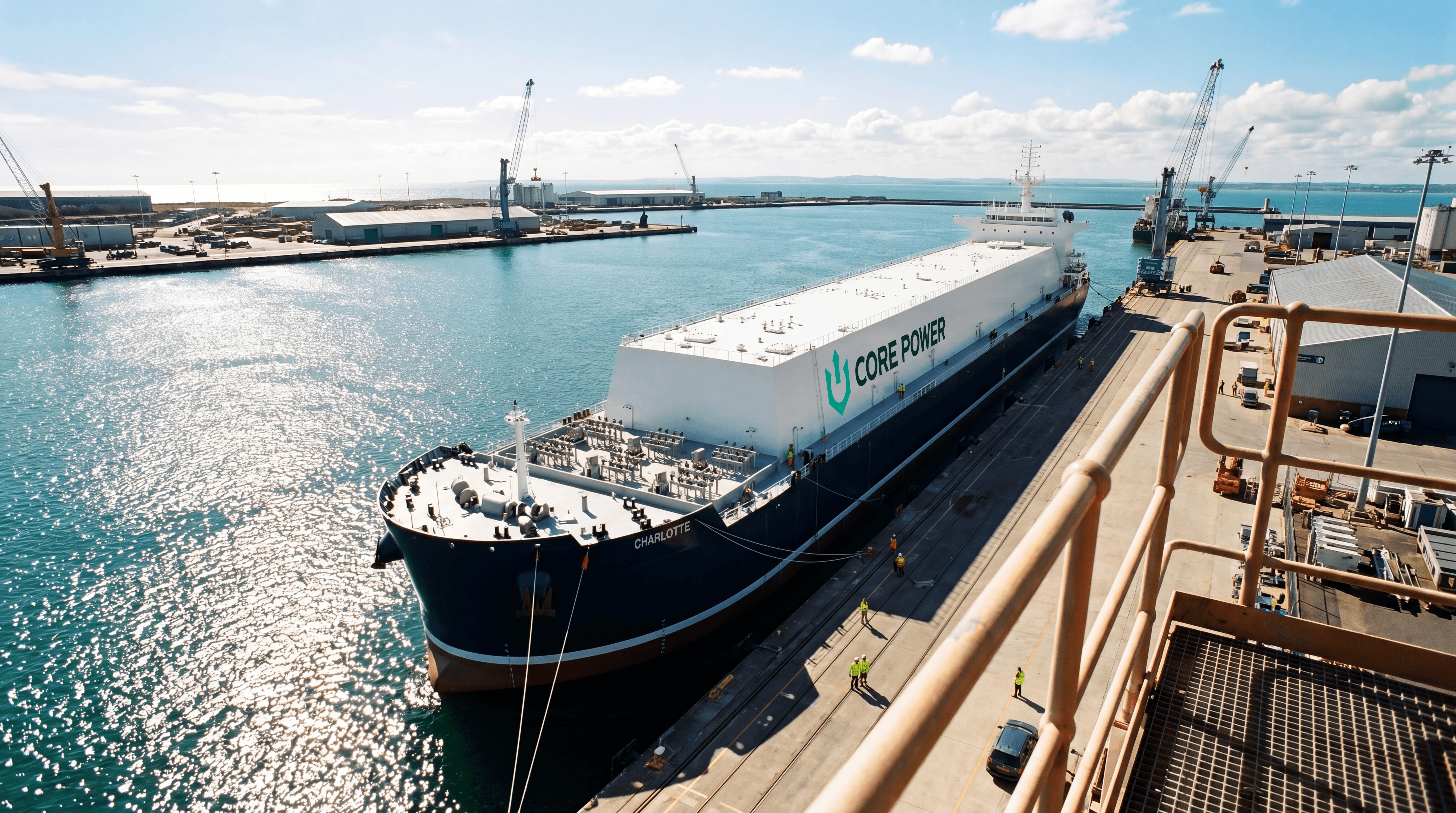
Project Pathfinder proposed as a route from first vessel to repeatable commercial fleet
On May 7 2026, the United States Maritime Administration (MARAD) issued a Request for Information (RFI) on the "Development of a Commercially Viable, System-Centric Small Modular Reactor Concept for Deployment in the Marine Transportation System".
On August 5 2026, CORE POWER submitted its public, 38-page response. The response outlines "Project Pathfinder," a " time-limited federally supported and commercially led program to design, build and place into regular service a U.S.-flagged nuclear-powered commercial ship."
Commercial nuclear propulsion is not simply a reactor challenge. It requires the vessel, reactor, operator, ports, shipyard, workforce, fuel, insurance, financing and end-of-life arrangements to work as one integrated commercial system. Project Pathfinder is designed to turn those elements into a repeatable pathway to commercial operation rather than another one-off demonstration.
MARAD’s Appendix to the request for information (RFI) distinguishes between a ten-year governance-first route and a seven-year accelerated route. CORE POWER recommends the accelerated route, but only if governance and engineering advance in parallel. Speed should come from early decisions, common evidence, a stable design and pre-funded infrastructure. It should not come from postponing liability, emergency planning, fuel, workforce or decommissioning questions. The accelerated route would build on well-understood technologies, existing supply-chain capability and mature U.S. nuclear and maritime institutions.
Our response identifies nine decisions that we believe would be needed to move from concept to deployment, including defining the first service and ports, selecting the fastest credible propulsion pathway, planning follow-on vessels, resolving liability and insurance, and beginning workforce development in year one.
Nine decisions for MARAD’s consideration
Create Project Pathfinder. Use MARAD’s convening leadership to establish a seven-year, time-limited program with a clear federal coordination mechanism, an integrated schedule and accountable commercial delivery.
Choose a bounded first service, including ports. Within twelve months, select a U.S.-flagged commercial mission and an owner and operator model. Define an initial international operating route between the United States and a prepared partner country, with a domestic alternative, participating ports and alternates.
Select the fastest credible propulsion pathway. Use performance, licensing, insurability, maintainability and delivery evidence to select the first reactor. Well-understood light-water technology is the leading near-term basis; molten-salt and other advanced systems with longer lead times should continue through parallel evidence gates.
Create an order book, not a one-off ship. The first-vessel contract should include firm or priced options for at least two additional vessels, supported by a durable cargo, charter or service commitment. It should also establish standard system interfaces, controlled design-change approval and sufficient rights to reuse resulting design, safety, regulatory and operating data.
Build the service base with the ship. Develop a U.S. commercial nuclear ship integration and lifecycle shipyard with nuclear quality assurance, commissioning, drydock access, maintenance, refueling, defueling and decommissioning capability.
Close liability and insurance before construction. Commission an authoritative legal analysis, engage insurers during the design process and seek narrowly tailored legislation or a first-of-a-kind federal backstop only where a defined market gap remains.
Use federal demand and finance tools. Combine milestone-based cost sharing, Title XI, shipyard and port finance, and a government cargo, charter or service commitment that creates operating revenue without removing commercial performance risk.
Plan for domestic and allied acceptance. Create a model port compact, a bilateral package for the first international service, a class and inspection pathway, a civilian workforce system and a sequenced route to bilateral and international acceptance.
Start workforce delivery in year one. Fund role and demand mapping, curricula, credentials, instructors and training facilities so that crews, yard trades, inspectors and emergency responders are qualified before they are needed.
The program should be judged by safe ship availability, cargo moved, schedule reliability, maintenance performance, port acceptance and the cost and time required to order the next ship. Reactor output and a successful first voyage are necessary, but they are not sufficient.
To read CORE POWER's full response, click here.