Study will examine opportunities for firm, reliable power from floating nuclear power plants and readiness for future calls by nuclear-powered commercial ships
Corpus Christi, Texas / Washington, D.C. / London, August 19, 2026 CORE POWER and the Port of Corpus Christi Authority (PCCA) have signed a Memorandum of Collaboration establishing a framework for a site-specific maritime nuclear readiness study at the Port of Corpus Christi.
The study will examine how a major U.S. energy and trade gateway could prepare for two additional distinct future roles: as a potential location for a floating nuclear power plant (FNPP) supplying firm power for port and regional demand, and as a gateway for future calls by nuclear-powered commercial ships.*
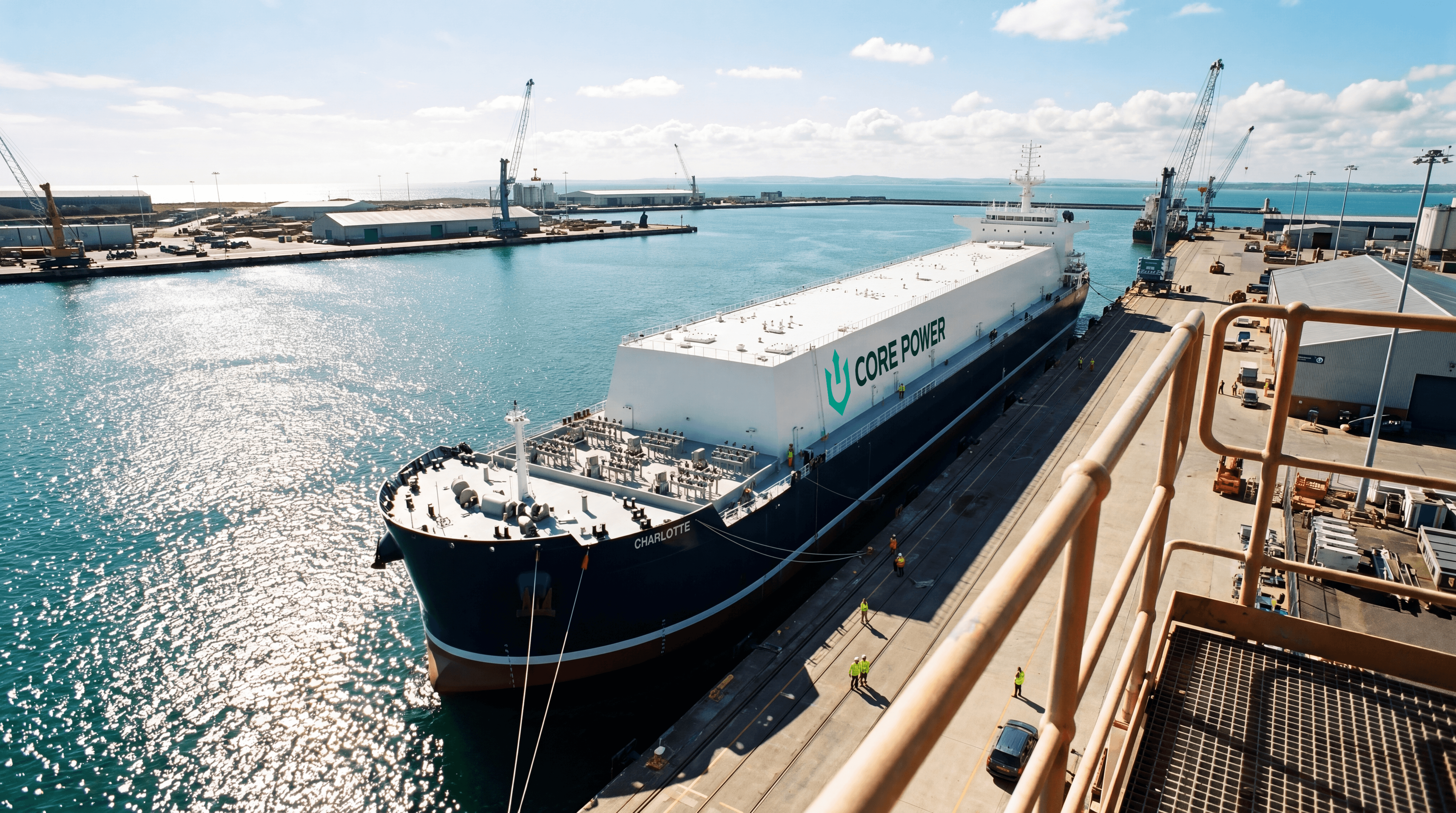
Rendering of a CORE POWER 300MWe FNPP preparing for operations
Energy systems and commercial shipping are changing rapidly. Ports that understand emerging infrastructure requirements early will be better placed to compete for investment, new industry, maritime activity and high-value jobs. For the Port, the work is intended to provide a practical evidence base for considering how future ship-based power and shipping technologies could support regional growth, energy resilience and long-term competitiveness.
For CORE POWER, the study will build out the practical requirements of its two product pathways in a real port operating environment. FNPPs require suitable sites, grid connections, customers, regulatory and environmental pathways, operating arrangements and long-term service support. Nuclear-powered commercial ships require safe and predictable pathways for transit, berthing and routine port operations. The Port of Corpus Christi provides an opportunity to assess both pathways separately while understanding the shared infrastructure, safety, regulatory and commercial questions around them.
Separately, PCCA Commissioners have agreed to execute a Memorandum of Cooperation with the U.S. Department of Transportation’s Maritime Administration to examine the technical, regulatory and operational requirements for U.S. seaports to support the potential deployment of floating nuclear power plants and provide safe harbor for civil nuclear-powered vessels. The agreement recognizes PCCA’s work with CORE POWER to assess the feasibility of both pathways. Taken together, these separate but complementary agreements represent an important step toward translating maritime nuclear technology into practical readiness requirements for U.S. ports.
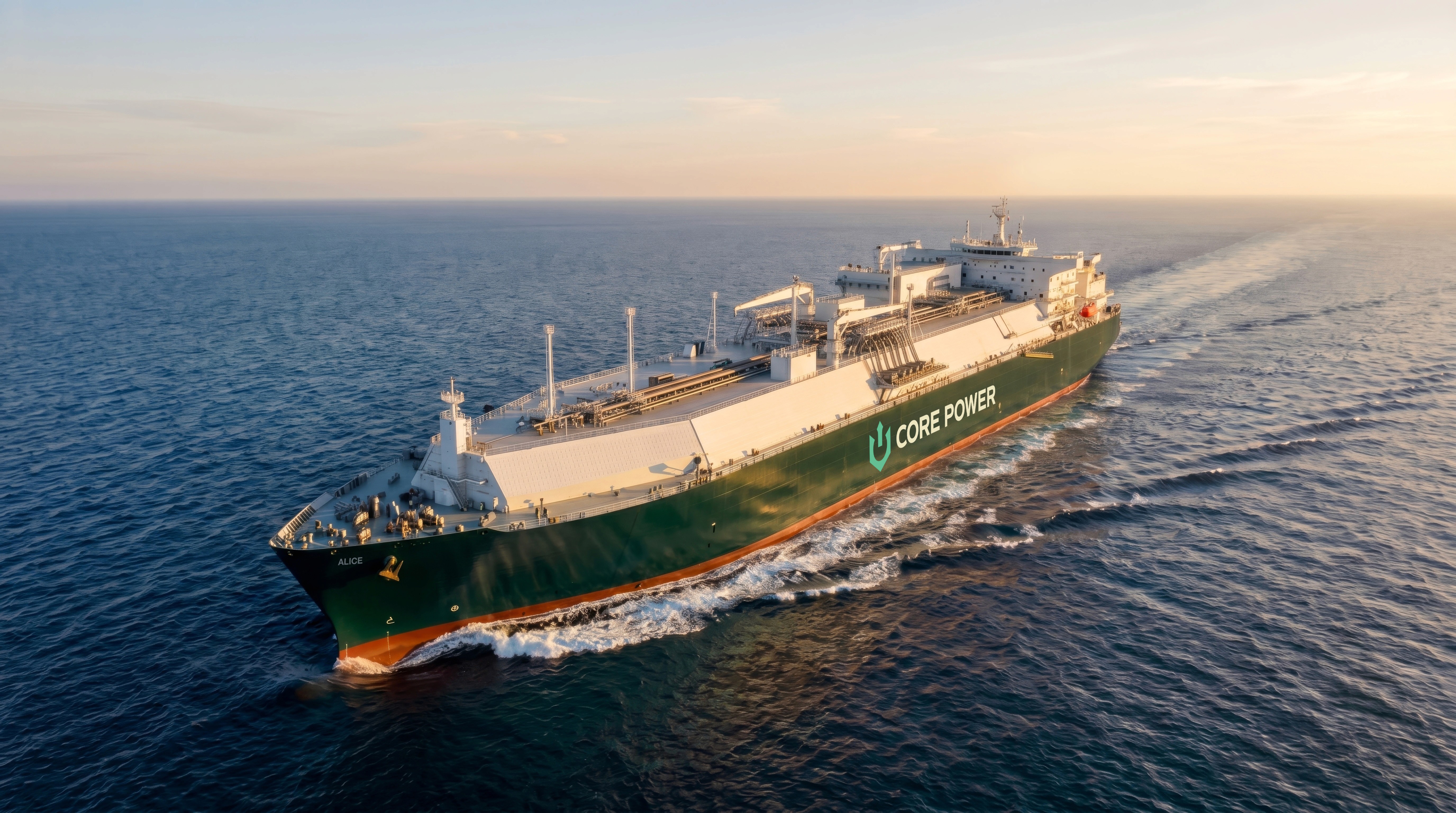
Rendering of a CORE POWER LNG tanker moving energy at speed
Jeff Pollack, Chief Strategy and Innovation Officer of the Port of Corpus Christi Authority, said:
“Port Corpus Christi, as the preeminent energy gateway in North America, is committed to remaining a leader in the global energy marketplace, even as that marketplace expands and evolves. This collaboration will help us understand what would be required technically, environmentally, operationally and commercially for floating nuclear power plants and future calls by nuclear-powered commercial ships to be considered in the real-world context of the Port. It is about gathering evidence and keeping our region competitive for future investment, industry, and high-value jobs.”
Mikal Bøe, CEO of CORE POWER, said:
“Ports are where energy systems and global trade meet. For floating nuclear power plants, we need to understand sites, grids, customers, operating models and long-term service arrangements. For nuclear-powered commercial ships, we need safe and predictable pathways for transit, berthing and routine port operations.
“Port Corpus Christi gives us a real operating environment in which to assess both pathways separately, but as parts of the complete industrial and regulatory system needed to make maritime nuclear commercially deployable. This is how we move from promising technology to products and infrastructure capable of supporting U.S. energy and maritime competitiveness.”
The proposed study is a preliminary, fact-finding exercise. It does not select a site, reactor technology or vendor; initiate licensing or permitting; commit investment; approve construction; or authorize the deployment of an FNPP or calls by nuclear-powered commercial ships.
ENDS
Notes to editors
*The proposed work covers two related but distinct product pathways. An FNPP is a ship-based power station designed to supply electricity to a coastal customer or grid. A nuclear-powered commercial ship uses a reactor as its onboard energy source for propulsion and ship services.
Under the Energy track, the parties intend to assess the site-specific technical, environmental, regulatory, operational and commercial requirements for the potential deployment of an FNPP. The work is expected to consider marine and site conditions, water use and discharge, grid connection, potential customer and offtake requirements, candidate locations and mooring, safety and security, permitting, operations, maintenance and long-term service support.
Under the Propulsion track, the parties intend to examine what would be required for the Port to receive nuclear-powered commercial ships safely and routinely in the future. The work is expected to consider a reference vessel and power-system envelope, transit and berthing, port-stay safety and security, cargo interfaces, emergency preparedness, liability, classification and the roles of U.S. and international maritime and nuclear authorities.
About CORE POWER
CORE POWER is building the industrial platform to enable fleet-scale maritime nuclear infrastructure. As a maritime nuclear systems integrator, the company is partnering with selected reactor technology developers to turn advanced nuclear systems into deployable assets, including floating nuclear power plants and nuclear-powered commercial ships.
These products will be delivered through modern shipbuilding principles, commercial hull construction, specialist nuclear-licensed integration and an end-to-end approach that aligns policy, regulation, insurance, operations and lifecycle support.
Headquartered in London with offices in Washington, D.C. and Tokyo, CORE POWER brings together nuclear and marine engineering depth with regulatory, policy, commercial and industrial expertise.
Media contacts
CORE POWER
Everett Rosenfeld – One Strategy Group
everett.rosenfeld@onestrat.com
+1 (410) 978-0733